The bank robber’s suicidal crisis
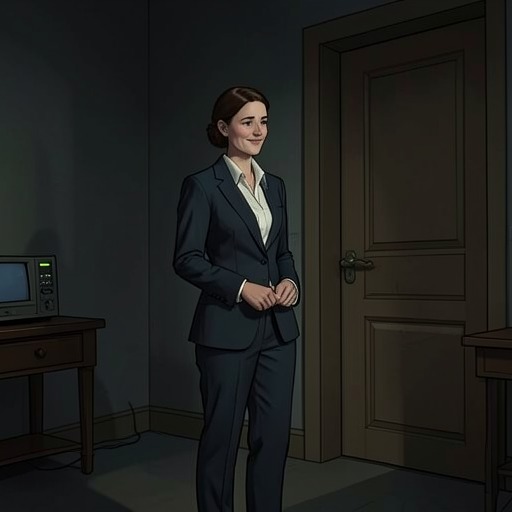
Anxious PeopleThe Bank robber’s suicidal crisis occurs in the hall of the apartment during the hostage drama, when the prospect of escape gives way to the prospect of being recognized as a criminal and losing her life with her daughters. Alone with her pistol, she begins to consider harming herself. Zara reaches her before she can act, lowering the weapon while leaving it in the Bank robber’s hand. The intervention is brief and unceremonious, but it breaks the isolation that has made the crisis feel inevitable.
The crisis in the apartment
The Bank robber sits apart from the people she has taken hostage, hearing their voices but feeling separated from them. As the others prepare to leave, she imagines the difference that will define their lives outside: they will be treated as victims, while she will be the criminal. She anticipates that the police may shoot her or that she may spend years in prison, and fears she will miss her daughters growing up, including their learning to swim. The immediate stakes are not abstract guilt alone but the future she believes is closing around her.
Her thoughts turn to her daughters, whom she associates with the monkey and frog in their family drawings. She imagines them having to become practiced liars, perhaps concealing the truth about their mother. This fear accompanies her recognition that the ski mask can no longer protect her. She removes it, understands that she cannot evade the police, and grips the pistol increasingly tightly. The crisis gathers through small changes in her conduct rather than a dramatic announcement: the mask comes off, her grip hardens, and her finger moves toward the trigger. She briefly considers whether she would have shot herself if the weapon had been real. Before she can settle the question, Zara’s hand closes around hers and gently lowers the pistol.
Zara’s intervention
Zara does not wrench the pistol away or approach the Bank robber with overt sympathy. She keeps her hand on the weapon and offers a short warning against doing anything reckless. The Bank robber looks at her and gives a weak smile; she does not act on the impulse. The exchange changes the immediate direction of the scene without resolving the larger danger of arrest, separation, or the consequences of the hostage crisis. Its force lies in stopping one action at the point when the Bank robber has become convinced that no one shares her destination.
The intervention is unexpected for both women. Zara then walks back to the balcony, puts on her headphones, and closes her eyes. Her retreat does not erase what she has done: she has entered the hall, interrupted the Bank robber’s isolation, and left her alive. Later, Zara eats pizza for the first time in her life, another small and unfamiliar experience amid the crisis. These details contrast the apparent enormity of the hostage drama with modest acts and sensations that continue after the moment in the hall.
The histories behind the encounter
Zara’s response is shaped by a history she has kept private. Ten years earlier, she watched from concealment as Nadia climbed onto the bridge railing and a boy rescued her. Zara found Nadia’s wallet and learned her name, then secretly followed her life and education from a distance. She also carried the letter left by the man who had jumped from that bridge, while fearing that returning to the scene or learning the truth about herself could bring her to the same point. The Bank robber’s isolation therefore reaches someone who knows, through her own prolonged fear and guilt, how difficult it can be to approach another person directly.
The Bank robber’s childhood offers a different history of guilt. As a child, she sold Christmas magazine issues after school and gave the money to her mother to buy food. Her mother, intoxicated and distressed, told her that the loss of the money was not her fault, while also telling her that she should not have given it over. It was the closest the mother came to asking forgiveness. The Bank robber still thinks about how difficult it is to hate her mother and how the event does not feel like her mother’s fault. This early confusion between explanation and responsibility echoes the way the Bank robber, in the apartment, faces the consequences of her own actions while fearing that those consequences will define all that remains of her life.
A fragile interruption, not a resolution
The episode reflects Nadia’s understanding that people want to be good, even when kindness toward others feels difficult. Zara’s act is not presented as a cure for the Bank robber’s circumstances; it is a moment in which she refuses to leave another person alone with a dangerous impulse. The crisis also sits beside the family lesson Jack remembers from his mother: help cannot always change the world, but people can do what they can when the opportunity arises. The Bank robber’s immediate decision not to act is one such limited, consequential change.
The scene does not erase the daughters’ uncertain future, the police presence, or the Bank robber’s responsibility for taking hostages. Instead, it holds those facts together with her vulnerability and with Zara’s own unfinished struggle over blame. In the hall, the pistol is lowered, not confiscated; the danger is interrupted, not explained away. That distinction gives the moment its significance: a person can be accountable for harm and still be met, at a decisive instant, by someone who helps prevent further harm.